Aider Review (2026): Is This Open-Source CLI AI Agent Right for You?

The landscape of developer tooling has fundamentally shifted. We have moved past simple autocomplete suggestions toward agentic workflows—systems capable of understanding entire codebases, executing multi-file refactors, and managing version control.
While Graphical User Interface (GUI) extensions and dedicated AI IDEs dominate marketing headlines, a quieter revolution is happening directly inside the command line. Aider has emerged as one of the most powerful, flexible, and developer-centric tools in this space. But is a terminal-native AI pair programmer right for your daily workflow, or should you stick to GUI-based environments?
Here is a comprehensive review of Aider, exploring its features, real-world performance, and how it stacks up against the competition.
1. Executive Summary & Quick Verdict
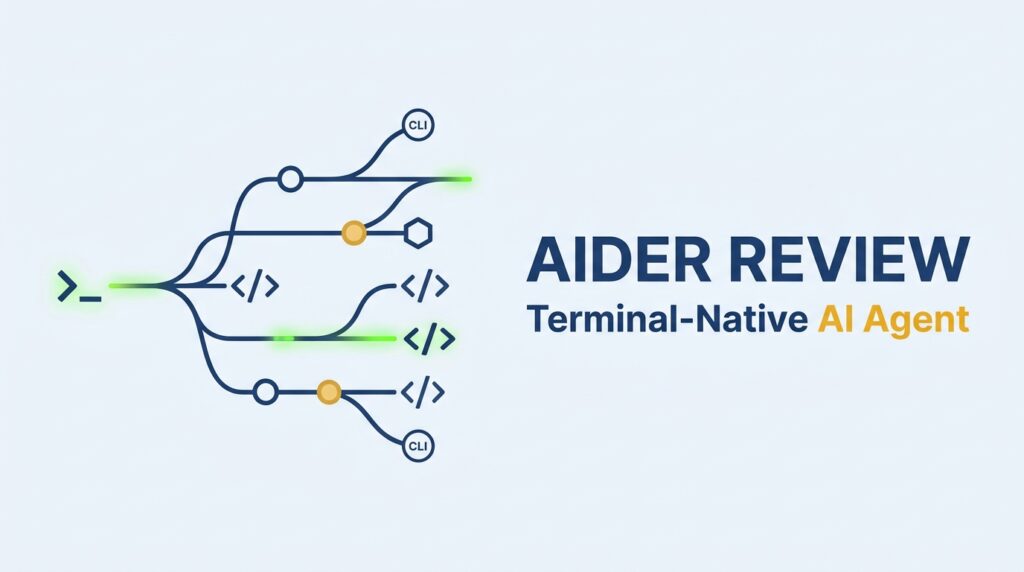
Aider is a free, open-source command-line interface (CLI) tool that pairs you with Large Language Models (LLMs) to edit code in your local Git repository. Unlike traditional extensions that offer inline completion, Aider operates as an autonomous pair programmer: it inspects your repository map, edits multiple files simultaneously, runs tests to verify its work, and automatically writes clean Git commit messages for every successful change.
Quick Specs & Overview
| Feature | Details |
| Interface | Terminal / CLI (Command Line Interface) |
| Model Support | Claude 3.5 Sonnet, DeepSeek-V3/R1, OpenAI GPT-4o, Ollama (Local LLMs) |
| Git Integration | Native (Auto-commits changes with descriptive messages) |
| Price | 100% Free & Open-Source (You only pay for API usage or run locally) |
| Best For | Senior developers, CLI enthusiasts, and privacy-conscious teams |
Pros & Cons
- Pros:
- Model Agnostic: Switch seamlessly between Anthropic, OpenAI, DeepSeek, or offline local LLMs.
- Git-Native: Auto-commits every logical change, making rollback effortless (
git reset). - Architectural Awareness: Uses repo-mapping techniques to understand multi-file dependencies.
- Cost-Effective: Zero subscription fees; built-in prompt caching minimizes API costs.
- Cons:
- Steep Learning Curve: Lacks a point-and-click GUI; requires comfort with the terminal.
- Manual Context Control: Requires explicit file tracking (
/add <file>) for optimal performance.
2. What is Aider? (Overview & Core Philosophy)
At its core, Aider is designed for developers who spend their lives in terminal multiplexers like Tmux, Neovim, or integrated IDE terminals. Instead of forcing you into a proprietary code editor, Aider meets you where your code lives.
Aider’s philosophy centers on collaborative agency. Rather than acting as a black-box system that generates code in isolation, Aider works directly alongside you in your terminal. You prompt Aider with a feature request or bug report, and it navigates your workspace, edits the relevant files, and asks for feedback.
In the broader taxonomy of [15. Open Source AI Coding Assistants], Aider represents a pure open-source approach to local pair programming. Furthermore, within the growing market of [10. AI Coding Agents], it sets the benchmark for terminal-driven autonomy without sacrificing control over your source code.
3. Key Features & How Aider Works
┌────────────────────────────────────────────────────────┐
│                   Developer Prompt                     │
└──────────────────────────┬─────────────────────────────┘
                           │
                           ▼
┌────────────────────────────────────────────────────────┐
│                   Tree-Sitter Repo Map                 │
│        (Extracts signatures & file relationships)      │
└──────────────────────────┬─────────────────────────────┘
                           │
                           ▼
┌────────────────────────────────────────────────────────┐
│                     LLM Processing                     │
│      (Claude 3.5 Sonnet / DeepSeek / Local Ollama)     │
└──────────────────────────┬─────────────────────────────┘
                           │
                           ▼
┌────────────────────────────────────────────────────────┐
│                   Multi-File Editing                   │
│          (Diffs applied directly to local code)        │
└──────────────────────────┬─────────────────────────────┘
                           │
                           ▼
┌────────────────────────────────────────────────────────┐
│                 Git Auto-Commit & Lint                 │
│     (Verifies tests and commits clean changes)         │
└────────────────────────────────────────────────────────┘
Git-Native Auto-Commits
Aider’s standout feature is its deep integration with Git. Every time Aider completes a task, it writes a concise, descriptive Git commit message summarizing its changes. If the AI makes a mistake or strays off course, you don’t need to manually undo changes—simply run /undo or use standard Git commands to step back to your previous clean state.
Multi-File Editing & Repository Mapping
Editing a single file is easy; refactoring an entire application across multiple modules is where most AI tools struggle. Aider solves this using a Tree-Sitter repository map. It creates a compact map of your entire codebase—extracting class names, function signatures, and variable definitions—and passes this structural context to the LLM. This enables Aider to understand how editing user_controller.py impacts auth_middleware.py without blowing through context windows.
Model Agnosticism & Local Execution
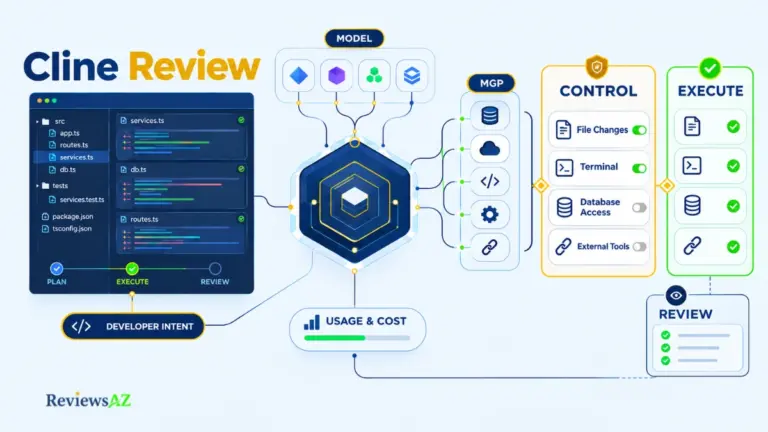
Aider does not lock you into a single vendor. You can configure it to use Claude 3.5 Sonnet for complex architectural reasoning, DeepSeek for cost-effective coding, or local models via Ollama when working offline. This multi-model flexibility places it right alongside tools like [13. Cline Review] for flexibility, while offering a streamlined terminal alternative to tools discussed in our [03. Claude Code Review].
4. Aider Setup & Practical Workflow
Setting up Aider takes less than two minutes via Python’s package manager:
Bash
# Install Aider
pip install aider-chat

# Set your preferred API key (e.g., Anthropic or OpenAI)
export ANTHROPIC_API_KEY=your_api_key_here

# Navigate to your project and launch Aider
cd /path/to/your/project
aider
Real-World Usage Scenarios
- Multi-File Refactoring:Add files to the chat session using
/add path/to/file.py. Ask Aider: “Refactor the authentication handler to use async/await across all added files.” Aider generates diffs, updates the files, and commits the work. - Automated Test-Driven Debugging:You can instruct Aider to run your test suite automatically after every edit:Bash
aider --test-cmd "pytest tests/" --auto-testIf a test fails, Aider reads the stack trace, adjusts its code, and re-runs the tests until everything passes. - Database Schema & SQL Refactoring:When working on backend data layers, Aider excels at updating ORM models alongside database queries. Similar to dedicated tools evaluated in our [01. AI Coding Assistant for SQL] analysis, Aider parses complex schema migrations and updates corresponding query functions in a single pass.
5. Aider vs. The Competition
To understand where Aider fits, we must compare it across three distinct categories: GUI IDEs, Autonomous Agents, and CLI Alternatives.
                  ┌──────────────────────────────┐
                  │      AI CODE ASSISTANTS      │
                  └──────────────┬───────────────┘
                                 │
         ┌───────────────────────┼───────────────────────┐
         ▼                       ▼                       ▼
┌──────────────────┐    ┌──────────────────┐    ┌──────────────────┐
│   CLI AGENTS     │    │   GUI / EDITORS  │    │AUTONOMOUS AGENTS │
├──────────────────┤    ├──────────────────┤    ├──────────────────┤
│ • Aider          │    │ • Cursor         │    │ • Devin          │
│ • Claude Code    │    │ • GitHub Copilot │    │                  │
│ • Cline (VSCode) │    │                  │    │                  │
└──────────────────┘    └──────────────────┘    └──────────────────┘
Aider vs. IDE-Based Assistants (Cursor & GitHub Copilot)
GUI-based tools like Cursor and Copilot focus on seamless visual integration.
- Cursor offers an outstanding visual experience with inline diffs, visual tab management, and visual context picking. (Read our detailed [02. Cursor Review]).
- GitHub Copilot excels at autocomplete within the editor ribbon. (See our [05. GitHub Copilot Review]).
Verdict: If you prefer point-and-click navigation and inline code completion, IDE extensions win. However, if you want zero editor bloat, automatic Git versioning, and scriptable terminal workflows, Aider is significantly faster.
Aider vs. Autonomous Background Agents (Devin)
Fully autonomous background agents attempt to handle end-to-end engineering tasks independently in isolated environments.
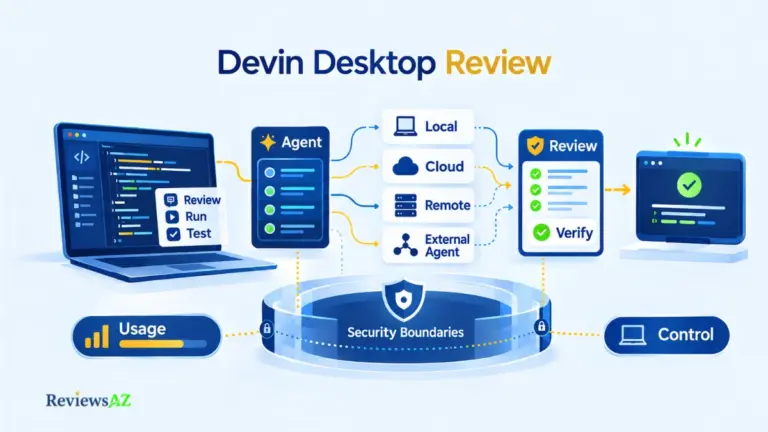
- As highlighted in our [11. Devin Desktop Review], autonomous agents act as remote workers taking high-level tickets.
- Aider acts as an interactive co-pilot operating directly inside your active local workspace.
Verdict: Aider keeps you directly in the loop, providing instant feedback without the latency or opacity of fully autonomous cloud sandboxes.
Aider vs. Terminal Competitors
The CLI AI landscape is expanding rapidly. For a broader breakdown of how terminal and editor models compare across the industry, review our comprehensive analysis on [04. Claude Code vs Cursor] and our deep-dive head-to-head comparison: [08. Cursor vs Claude Code vs Codex vs GitHub Copilot].
6. Pricing, Cost Efficiency & Token Optimization
One of Aider’s strongest selling points is its pricing model: it is 100% free and open-source software.
You do not pay a monthly $20–$40 subscription fee to use the tool. Instead, you pay only for the raw API tokens you consume through providers like Anthropic, OpenAI, or OpenRouter.
Cost Optimization Features
- Prompt Caching Support: Aider leverages prompt caching APIs from Anthropic and OpenAI. By caching your repository map and conversation history, subsequent prompts during a session cost up to 80% less than standard API calls.
- Local LLM Compatibility: By pairing Aider with Ollama or vLLM running models like DeepSeek-R1 locally, your operating cost drops to $0, making it completely free to run offline.
7. Security, Privacy & Enterprise Readiness
For commercial teams, sending proprietary source code to third-party endpoints is often a compliance blocker.
       ┌────────────────────────────────────────────────────────┐
       │             Enterprise Security Workflows              │
       └──────────────────────────┬─────────────────────────────┘
                                  │
                  ┌───────────────┴───────────────┐
                  ▼                               ▼
      ┌───────────────────────┐       ┌───────────────────────┐
      │     Zero Data-Leak     │       │     Custom Endpoints  │
      │   Local LLM via Ollama│       │    Private Cloud API  │
      └───────────────────────┘       └───────────────────────┘
Aider addresses enterprise privacy requirements through two main architectures:
- Air-Gapped Local Execution: By pointing Aider to an internal, locally hosted LLM endpoint via Ollama or an enterprise vLLM instance, zero code leaves your corporate network.
- Direct API Connections: Unlike middleware platforms that proxy your requests through their own servers, Aider communicates directly from your terminal to your cloud provider’s official API (e.g., AWS Bedrock, Azure OpenAI, or Anthropic Enterprise).
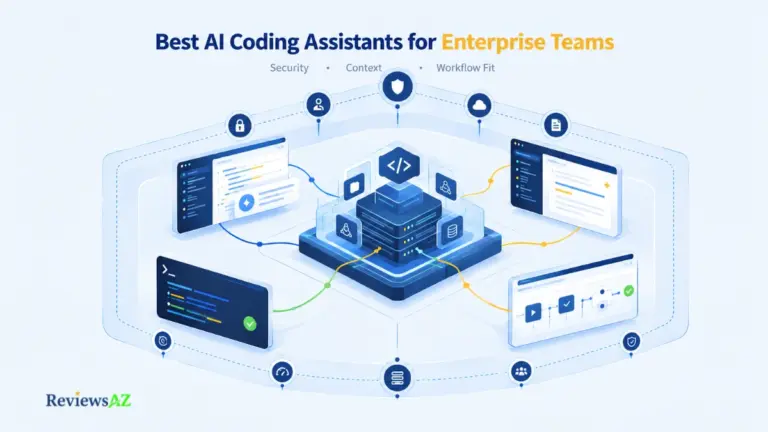
When comparing Aider against enterprise suites in our [12. Best AI Coding Assistants for Enterprise Teams] roundup, Aider stands out as an exceptional lightweight choice for teams requiring full data sovereignty. For a broader perspective on categorical ecosystem standards, explore our primary reference guide: [09. AI Code Assistants].
8. Final Verdict: Should You Use Aider?
Aider is not designed for everyone—and that is its greatest strength. It does not try to be a flashy, feature-bloated IDE extension. Instead, it focuses on doing one thing exceptionally well: providing terminal-native, Git-aware, agentic pair programming for serious developers.
Who Is Aider For?
- Terminal Power Users: Developers who prefer Neovim, Tmux, or command-line workflows.
- Git Disciplinarians: Engineers who value granular, auto-committed logical changes.
- Cost & Privacy Conscious Teams: Users who want to bring their own API keys or run local models offline.
Who Should Skip It?
- Beginners who rely on graphical drag-and-drop IDE interfaces.
- Developers looking purely for real-time inline ghost-text autocomplete.