
The Ultimate Guide to AI Code Editor: Transform Your Software Development Workflow

Software development has always been defined by a continuous quest to abstract complexity. In the early decades of computing, programmers manually flipped switches, routed patch cables, and painstakingly typed machine instructions in assembly language. The introduction of high-level programming languages like C, Fortran, and Lisp marked the first major paradigm shift, allowing developers to express logic in human-readable terms. Decades later, the rise of Integrated Development Environments (IDEs) in the 1990s and 2000s introduced syntax highlighting, automated refactoring, and static code analysis, transforming the software workspace into an integrated dashboard of productivity tools.
Today, we are witnessing the most radical evolution in the history of software creation: the transition from static, rule-based development environments to dynamic, context-aware AI code editors.
Unlike traditional text editors that rely strictly on deterministic rules, regular expressions, and abstract syntax trees (ASTs), modern AI code editors utilize Large Language Models (LLMs) trained on billions of lines of source code. These tools do not merely predict the next token based on simple patterns; they infer developer intent, synthesize complex multi-file structures, diagnose non-obvious runtime errors, and draft documentation in real time.
This evolution shifts the developer’s role from a manual syntax writer to an architect and orchestrator of software systems. As these intelligent interfaces become the core operational layer for engineering teams worldwide, understanding their underlying architecture, strategic advantages, and practical applications becomes paramount. To explore the full ecosystem of intelligent development tools, visit our comprehensive breakdown of #AI Code Editors & IDEs.
Understanding the AI-Driven Paradigm: What is “Vibe Coding”?
As artificial intelligence deeply integrates into the modern software stack, the developer experience (DX) is undergoing a profound cultural and operational shift. The traditional mental model of programming—painstakingly writing, testing, and debugging every single line of code—is giving way to a high-level interactive conversation between human developers and machine learning agents.
+-----------------------------------------------------------------------+
|                      TRADITIONAL DEVELOPER WORKFLOW                   |
|                                                                       |
|  [ Mental Model ] ---> [ Manual Syntax ] ---> [ Compilation/Build ]   |
|                                                     |                 |
|                                                     v                 |
|  [ Deploy & Maintain ] <--- [ Manual Debugging ] <---                 |
+-----------------------------------------------------------------------+

                                   vs.

+-----------------------------------------------------------------------+
|                       AI-AUGMENTED WORKFLOW                           |
|                                                                       |
|  [ Architectural Intent ] ---> [ Natural Language Prompt ]            |
|                                            |                          |
|                                            v                          |
|  [ Deployment ] <--- [ Human Verification ] <--- [ AI Code Synthesis ]|
+-----------------------------------------------------------------------+
From Syntax Generation to Architectural Intent
Historically, developers spent up to 70% of their working hours dealing with boilerplate code, syntax lookup, API integration details, and environment configuration. AI code editors invert this ratio. By allowing engineers to describe functional requirements in natural language, the developer shifts focus toward structural architecture, algorithmic efficiency, and domain logic.
This transformation has given rise to modern development concepts where engineers operate at the level of systems orchestration. The emerging workflow—often referred to as prompt-driven engineering—redefines how developers interact with their codebases. This shift toward prompt-driven programming has popularized #What Is Vibe Coding, redefining how engineers interact with their codebases.
The Cognitive Impact of AI-Assisted Workflows
The primary bottleneck in modern software engineering is rarely typing speed; it is cognitive load. Context-switching between code files, official documentation, Stack Overflow threads, and terminal logs creates substantial mental friction. AI code editors mitigate this fatigue through several key mechanisms:
- Minimized Context Switching: Instead of leaving the IDE to look up API syntax or library specifications, developers query their code editor directly, which retrieves context from internal repositories or indexed online documentation.
- Reduced Boilerplate Fatigue: Repetitive code patterns—such as setting up REST API endpoints, writing CRUD operations, or configuring database schemas—are generated instantaneously.
- Continuous Feedback Loops: Real-time inline suggestions provide instant validation of code logic, allowing developers to identify errors before running build scripts or unit tests.
Key Capabilities & Architectures of Modern AI Code Editors
To appreciate how AI code editors operate, one must look beyond the user interface and understand the underlying technical architecture that makes real-time, context-aware code generation possible.
                    +-----------------------------+
                    |  Developer Input & Prompt   |
                    +--------------+--------------+
                                   |
                                   v
                    +-----------------------------+
                    | Context Engine (RAG/AST/LSP)|
                    | - Repository Indexing       |
                    | - Open Files & Cursor Pos.  |
                    +--------------+--------------+
                                   |
                                   v
                    +-----------------------------+
                    | Large Language Model (LLM)  |
                    | - Inference & Completion    |
                    +--------------+--------------+
                                   |
                                   v
                    +-----------------------------+
                    |  Post-Processing & Safety   |
                    | - AST Validation           |
                    | - Telemetry & Privacy Check |
                    +--------------+--------------+
                                   |
                                   v
                    +-----------------------------+
                    | Inline Edit / Multi-File    |
                    +-----------------------------+
Deep Context Recognition & Repository-Wide Indexing
Early iterations of AI code completion operated locally on small context windows, only analyzing the active file or the immediately preceding lines of code. Modern AI editors employ Retrieval-Augmented Generation (RAG), vector embeddings, and Language Server Protocols (LSP) to construct a comprehensive mental model of the entire project repository.
- Vector Embedding Indexing: Editors split your codebase into semantic chunks, embed them using vector models, and store them locally or in secure cloud instances. When a developer asks a question or writes a prompt, the system performs vector similarity searches across the repository to pull in relevant utility functions, type definitions, and database schemas.
- AST Integration: By pairing probabilistic neural networks with deterministic Abstract Syntax Trees (ASTs), modern editors verify that generated suggestions adhere strictly to the target programming language’s syntax and scope constraints.
Real-Time Autocomplete vs. Multi-File Agentic Editing
AI code editors operate across a spectrum of autonomy:
| Dimension | Real-Time Autocomplete | Multi-File Agentic Editing |
| Primary Interaction | Inline ghost-text suggestions | Chat interfaces, slash commands, agent modes |
| Scope of Change | Single line or isolated code block | Entire files, cross-directory refactoring |
| Context Required | Immediate cursor surroundings, open tabs | Full workspace indexing, terminal logs, Git history |
| Execution Style | Synchronous, low-latency (<100ms) | Asynchronous execution, iteratively loops until complete |
| Typical Target | Function implementation, line completion | Feature additions, framework migrations, test suites |
Security, Data Privacy, and Enterprise Compliance
As codebases contain valuable intellectual property and proprietary business logic, enterprise adoption of AI code editors hinges strictly on security architecture:
- Zero-Data Retention (ZDR): Enterprise-grade AI editors guarantee that proprietary code snippets transmitted to remote inference servers are processed in memory and never stored, logged, or utilized to retrain base models.
- Local Inference Engines: Organizations operating under strict regulatory frameworks (such as HIPAA, GDPR, or SOC2) increasingly deploy local models via frameworks like Ollama or specialized hardware clusters, preventing any source code from exiting the corporate network perimeter.
- Vulnerability Scanning & Licensing Checks: Modern AI engines incorporate real-time security filters that analyze generated code for known Common Vulnerabilities and Exposures (CVEs) and verify that output does not inadvertently replicate copyleft open-source licenses.
Specialized Use Cases: Matching Tools to Your Stack
Not all AI code editors are created equal. The optimal choice depends heavily on your specific programming domain, infrastructure stack, and ecosystem requirements.
                     +---------------------------------------+
                     | Specialized AI Development Use Cases  |
                     +-------------------+-------------------+
                                         |
             +---------------------------+---------------------------+
             |                                                       |
             v                                                       v
+-------------------------+                             +-------------------------+
|   Data Science & ML     |                             |  Web & Full-Stack Dev   |
| - Python & Jupyter      |                             | - JS/TS Ecosystem       |
| - Pandas/PyTorch Context|                             | - Component Synthesis   |
| - Data Exploration      |                             | - API Integration       |
+-------------------------+                             +-------------------------+
Data Science, Machine Learning, and Analytics
Data scientists and machine learning engineers have unique workflow patterns that rely heavily on interactive computing, rapid data exploration, and iterative experimentation.
- Jupyter Notebook & REPL Integration: Traditional IDE tools often struggle with the non-linear execution of interactive Python notebooks. AI editors tailored for data workflows excel at reading stateful variable environments, analyzing cell outputs, and recommending data transformation steps.
- Framework-Specific Optimization: AI engines tuned for scientific computing can automatically generate vectorization routines in NumPy, build complex PyTorch neural network modules, or construct data cleaning pipelines in Pandas without manual reference checks.
- Contextualizing Large Datasets: If your primary focus is data pipelines, algorithm design, or deep learning architectures, choosing a specialized #AI code editor for Python optimizes autocompletion for complex libraries and scientific paradigms.
Web & Full-Stack Development
Web development requires switching between frontend markup, declarative styles, type systems, API endpoints, and database ORMs.
- Cross-Language Context Awareness: Full-stack developers frequently move between HTML/JSX templates, TypeScript definitions, CSS frameworks like Tailwind, and backend SQL queries. Modern web-focused AI editors maintain cross-file reference models, automatically updating server endpoints when API payload types change on the client side.
- UI/UX Component Generation: Modern AI web tools can translate wireframe images or plain descriptions directly into styled, accessible component code (e.g., React, Vue, Svelte) integrated directly into your existing design token system.
- Automated API Mocking: Web-oriented editors can inspect backend schema declarations and automatically construct fully typed mock servers and client-side fetch clients. For frontend and backend workflows, leveraging an #AI IDE for web development streamlines component building and debugging.
Categorizing the AI Coding Landscape
The market for intelligent development environments has expanded rapidly, producing specialized sub-categories designed to meet different developer priorities, budgets, and operational policies.
+-------------------------------------------------------------------------------+
|                        THE AI CODING LANDSCAPE                                |
|                                                                               |
|  +---------------------------+                 +---------------------------+  |
|  |   Open Source Solutions   |                 |    Free & Freemium Tiers  |  |
|  | - Complete Code Privacy   |                 | - Low Friction Onboarding |  |
|  | - Custom Local LLM Models |                 | - Ideal for Students &    |  |
|  | - Self-Hosted Deployments |                 |   Hobbyists               |  |
|  +---------------------------+                 +---------------------------+  |
+-------------------------------------------------------------------------------+
Open Source & Privacy-First Editors
For developers, security teams, and organizations operating under strict compliance restrictions, open-source AI code editors offer complete operational control over code data flows.
- Self-Hosting Capabilities: Open-source platforms allow teams to host their own inference servers on-premises or within secure cloud environments, completely isolating source code from external AI API vendors.
- Custom Model Fine-Tuning: Teams can fine-tune open weights models (such as DeepSeek-Coder, CodeLlama, or Qwen-Coder) on internal company repositories, teaching the AI legacy internal framework conventions and unique coding standards.
- Modular Architecture: Open-source editors often allow users to swap out context indexing algorithms, vector databases, and model endpoints at will, preventing vendor lock-in.
- Developers who prioritize codebase privacy and modular configurations should check out our curated list of the #Best Open Source AI Code Editors.
Free & Freemium Tiers for Students and Hobbyists
The democratizing power of AI coding tools is best illustrated by the robust free tiers offered across the industry.
- Low Barrier to Entry: Free tools allow developers to evaluate context accuracy, system latency, and interface design without immediate financial commitment.
- Community-Driven Enhancements: Many freemium platforms offer generous usage limits for open-source maintainers, students, and independent developers, cultivating active communities that continuously test edge cases.
- If you are getting started without an upfront investment, explore our comprehensive evaluation of the #Best Free AI Code Editors.
Comparative Analysis: Leading AI Editors & IDEs in the Market
To help you navigate the landscape, we have analyzed top industry solutions by performance, architecture, deployment model, and primary target audience.
+---------------------------------------------------------------------------------+
|                        DEVELOPMENT ENVIRONMENT SEGMENTS                         |
+--------------------------+--------------------------+---------------------------+
| Enterprise Ecosystems    | Cloud-Native Platforms   | Next-Gen Agentic Tools    |
| (GitHub Copilot,         | (Replit AI,              | (Augment Code,            |
| JetBrains AI)            | Blackbox AI)             | Kiro IDE)                 |
+--------------------------+--------------------------+---------------------------+
A. Enterprise & Ecosystem Giants
These platforms leverage existing, massive developer ecosystems, seamlessly layering AI capabilities onto established code editors and IDEs used by millions of developers daily.
GitHub Copilot
As the early pioneer in consumer-facing AI code completion, GitHub Copilot remains the industry benchmark for deep integration within Visual Studio Code, Visual Studio, Neovim, and JetBrains IDEs. Powered by OpenAI’s latest models, Copilot excels at inline ghost-text suggestions, CLI command generation, and repository-level pull request summaries. Its enterprise tiers provide robust IP indemnification, enterprise access controls, and custom model indexing.
JetBrains AI Assistant
Designed specifically for JetBrains’ suite of language-specific IDEs (IntelliJ IDEA, PyCharm, WebStorm, CLion), JetBrains AI Assistant integrates directly with the IDE’s internal refactoring engine and structural code index. Because JetBrains IDEs possess an extraordinarily deep understanding of abstract syntax trees, its AI features offer high precision when performing structural refactoring, writing unit tests, or generating documentation in enterprise Java, Kotlin, and Python environments.
- For a head-to-head evaluation of market leaders, read our in-depth comparison on #GitHub Copilot vs JetBrains AI Assistant or check out the standalone #JetBrains AI Assistant Review.
B. Cloud-Native & Web-Based Environments
Cloud-native environments abstract away local development setup completely, hosting the editor, runtime environment, terminal, and AI inference engines within cloud infrastructure.
Replit AI
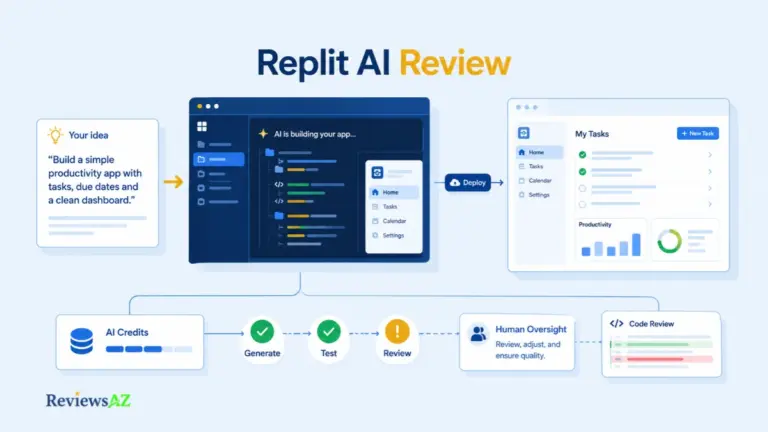
Replit has redefined the developer onboarding experience by moving the entire dev environment to the browser. Replit AI acts as a collaborative partner capable of building, installing dependencies, deploying infrastructure, and debugging software applications directly from plain-English prompts. It is designed for ultra-fast prototyping, collaborative cloud coding, and immediate web application deployment.
Blackbox AI
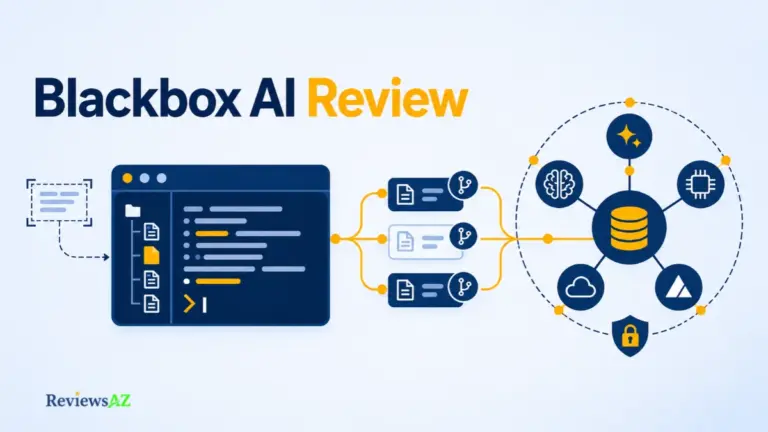
Built with an intense focus on rapid code search and real-time generation speed, Blackbox AI provides web-based developers with real-time indexing of online documentation, GitHub repos, and video tutorials. It excels at extracting code snippets, transforming user requests into fully functional backend services, and rapidly generating cross-browser web code.
- To see how cloud-native platforms compare, view our head-to-head breakdown of #Replit vs Blackbox AI, or read our standalone #Replit AI Review and #Blackbox AI Review.
C. Next-Gen & Agentic Coding Tools
Representing the vanguard of AI development, next-gen editors move beyond passive completion toward autonomous software agents capable of navigating, reasoning about, and modifying complex codebases.
Augment Code
Augment Code is purpose-built for enterprise-scale codebases containing millions of lines of code. By combining low-latency indexing with specialized context engines, Augment can instantly pull relevant API schemas and utility logic from distant microservices across your organization. It delivers exceptionally fast inline completions and contextual code awareness without suffering from latency degradation on massive software projects.
Kiro IDE
Kiro IDE represents the next evolution of autonomous developer environments. Built around agentic workflows, Kiro does not simply wait for inline prompts; it can execute multi-step engineering assignments. Given a task (such as “Migrate our database access layer from REST to GraphQL”), Kiro creates an execution plan, updates multiple code files across directories, executes terminal commands to run test suites, and iteratively fixes build failures until the objective is achieved.
- For cutting-edge agentic workflows, explore our comparison of #Augment Code vs Kiro, or dive into the detailed #Augment Code Review and #Kiro IDE Review.
Comparative Market Overview
The following matrix highlights key differences across leading platforms to guide your team’s evaluation process:
| Feature / Metric | GitHub Copilot | JetBrains AI Assistant | Replit AI | Blackbox AI | Augment Code | Kiro IDE |
| Primary Deployment | Extension (VS Code / JetBrains) | Native IDE Integration | Cloud / Web Browser | Cloud / Extension | IDE Extension / Native Client | Dedicated Agentic IDE |
| Target Audience | Enterprise & General Devs | Enterprise Polyglot Devs | Rapid Prototypers & Web Devs | Fast Web & Backend Coders | Large-Scale Enterprise Teams | Advanced Agentic Engineers |
| Context Indexing Scope | Local Workspace + Repos | Deep AST & Local Workspace | Cloud Container State | Online Docs & Workspace | Massive Cross-Repo Indexing | Full Project & System Agent State |
| Agent Autonomy | Moderate (Copilot Workspace) | Low to Moderate | High (Cloud Agent) | Moderate | High | Very High (Autonomous Loops) |
| Primary Strength | Ubiquitous Ecosystem Support | AST-Precision Refactoring | Instant Zero-Setup Deployment | High-Speed Generation | Ultra-Fast Large Repo Context | Autonomous Multi-File Execution |
Frequently Asked Questions (High-Search Volume FAQs)
Q1: Do AI code editors replace software engineers?
Answer: No. AI code editors act as force multipliers rather than software engineering replacements. While these tools automate mechanical tasks—such as generating boilerplate syntax, translating APIs, and running repetitive unit tests—they lack higher-order reasoning. Software engineering encompasses system architecture design, trade-off analysis, domain modeling, security governance, and translating vague business requirements into robust technical specifications. AI editors allow developers to operate at a higher level of abstraction, enabling a single engineer to deliver systems that previously required small teams.
Q2: Which AI code editor is best for beginners?
Answer: Beginners benefit most from cloud-native platforms with zero local environment setup, such as Replit AI, or ubiquitous extensions like GitHub Copilot inside VS Code. Replit AI provides an intuitive playground where learners can generate code and immediately see execution results in the same browser tab without configuring compilers, paths, or virtual environments. Meanwhile, GitHub Copilot’s inline completions provide real-time guidance that reinforces language syntax patterns as new coders type.
Q3: How do AI code editors handle data privacy and code security?
Answer: Top-tier enterprise AI editors implement multi-layered privacy policies. Providers of tools like GitHub Copilot Business, JetBrains AI, and Augment Code commit to Zero-Data Retention (ZDR) agreements, ensuring your proprietary code is processed in volatile memory only and never stored or used to train public foundational models. Furthermore, many editors include automated vulnerability checks that flag unsafe code patterns (such as SQL injections or unencrypted credentials) before the code is committed to version control.
Q4: What is the difference between an AI IDE and an AI coding extension?
Answer: An AI coding extension (such as GitHub Copilot running in VS Code) adds intelligent text completion to a traditional, human-centric text editor. A native AI IDE (such as Cursor or Kiro IDE) is engineered from the ground up around artificial intelligence. In a native AI IDE, context indexing, file navigation, system terminal interactions, and multi-file editing operate through an agentic core, allowing the AI to manipulate files, run terminal commands, and refactor applications with higher autonomy.
Q5: Can AI code editors work offline?
Answer: Most mainstream AI editors rely on cloud-hosted LLMs accessible via REST APIs. However, developers working offline or within air-gapped secure facilities can run AI editors connected to local open-weight inference models using local model runtimes like Ollama or LM Studio. By configuring open-source extensions (such as Continue.dev) to query local models (like DeepSeek-Coder or CodeLlama running on local GPU hardware), developers can achieve complete offline AI-assisted code generation.
Conclusion: The Future of Developer Workflows
The software industry has arrived at a definitive tipping point. The era of writing software entirely line-by-line, relying solely on human memory and static documentation, is concluding. AI code editors are no longer experimental novelties reserved for early adopters; they have rapidly become essential infrastructure for high-performing engineering organizations.
By bridging human architectural intent with synthetic code generation, modern development tools dramatically reduce cognitive load, eliminate low-level operational friction, and accelerate product velocity. Whether you deploy lightweight inline autocompletion across traditional text editors, host privacy-first open-source models within air-gapped environments, or orchestrate autonomous multi-file refactoring agents, adopting an AI code editor is the single most transformative operational decision a modern software engineer or technical team can make today.
As model context windows expand, latency shrinks, and agentic capabilities mature, the developers who thrive will be those who master the art of directing, evaluating, and refining intelligent code tools. The future of software engineering is collaborative, context-aware, and AI-augmented—and it begins directly within your development environment.